Turn Branded Items Into Digital Doorways: How QR Codes and NFC Help Small Businesses Get More From Their Branding
A printed item does not have to be the end of a customer interaction. A business card, shopping bag, product label, yard sign, or branded water bottle can also be the beginning of one.
By adding a QR code or NFC link to a physical item, a business can connect customers directly to a special offer, appointment page, digital menu, how-to video, company story, review request, loyalty signup, or product information. The printed piece still does its job: building recognition and trust: but it now opens a convenient path to the next step.
For small businesses, this is a practical way to make branding more useful without making it complicated.
What Is a “Digital Doorway”?
A digital doorway is a physical touchpoint that leads someone to a specific online experience.
Instead of printing only a phone number or website address, you can give customers an immediate action:
- Scan for today’s menu
- Tap to book an appointment
- Scan for a new-customer offer
- Tap to watch the installation video
- Scan to reorder
- Tap to learn the company’s story
- Scan to leave genuine feedback
- Tap to join a loyalty program
The goal is not to add technology simply because it is available. The goal is to connect a useful physical item to a helpful digital destination.
QR Codes and NFC: What Is the Difference?
QR codes
A QR code is a camera-scannable printed code. Most modern smartphones can scan one using the standard camera app. Once scanned, it can open a web page, video, form, menu, booking page, or other online destination.
QR codes can be printed on nearly any branded surface, including:
- Product labels and packaging
- Takeout menus and shopping bags
- Business cards and mailers
- Yard signs and banners
- Vehicle decals
- Apparel tags and safety vests
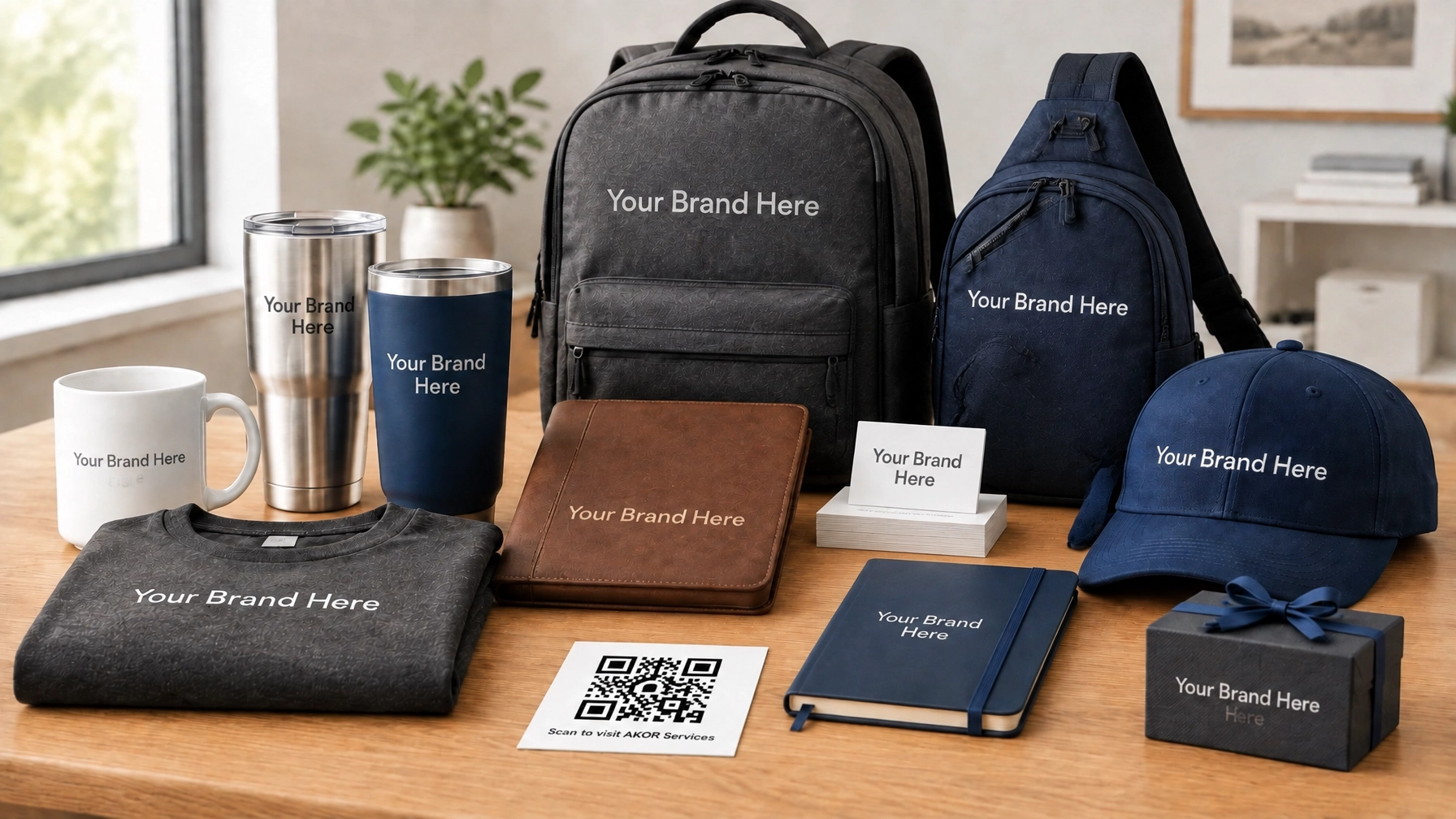
- Promotional pens, magnets, and drinkware
- Brochures, postcards, and countertop displays
QR codes are usually a cost-effective option because they can be incorporated directly into the printed artwork.
NFC
NFC, or near-field communication, uses a small battery-free chip or tag that a customer taps with a compatible smartphone. The tag can be embedded in a business card, sign, product, piece of merchandise, display, or packaging.
NFC Forum materials describe customer-engagement uses such as offers and rewards, product information, reordering, authenticity, and post-purchase interactions. In retail, NFC can help connect a customer to information before, during, and after a purchase.
NFC can create a very smooth experience: tap the item, and the phone opens the linked destination. It is especially useful for premium cards, displays, loyalty pieces, product tags, and merchandise where a subtle technology feature fits the brand.
QR codes and NFC can also be used together. A visible QR code gives everyone a familiar scanning option, while an embedded NFC tag gives compatible phones a tap-to-open alternative.
Three Practical Examples for Small Businesses

1. Restaurant: Keep Printed Menus Useful While the Digital Destination Changes
A restaurant can print a QR code on a takeout menu, branded shopping bag, table tent, receipt, or sticker.
That code might open:
- The current digital menu
- Online ordering
- A limited-time offer
- Catering information
- Dietary and allergen details
- A reservation or inquiry page
- A loyalty signup
Printed To Go menus are still useful for customers who want something tangible. However, the digital destination can be updated as prices, specials, hours, or seasonal offerings change.
For example, a restaurant could keep the same branded bag design throughout the year while the QR code destination changes from a summer catering offer to a holiday ordering page. Customers receive a useful printed item, and the business avoids redesigning the entire bag every time the promotion changes.
AKOR Services has experience supporting restaurant technology and branding projects, including planning printed materials that complement point-of-sale systems such as SpotOn. QR codes and NFC do not automatically integrate with SpotOn, but they can be planned alongside it to direct customers to a current digital menu, online ordering, promotions, catering inquiries, loyalty signups, or other useful next steps.
We also have experience with digital display board design software such as Jumbilin. Digital menu boards and QR-enabled printed pieces can work together as part of a consistent restaurant branding and customer-experience system. For example, a restaurant might coordinate in-store digital menu board messaging with printed table tents, takeout bags, or counter cards so customers see a consistent offer whether they are ordering at the counter, scanning for details, or taking information with them. As with SpotOn, QR codes and NFC are best viewed as complementary tools that can be planned together with digital display content, not as automatic integrations.
2. Contractor or Service Business: Turn Visibility Into an Estimate Request
A contractor, landscaper, cleaner, remodeler, or mobile service business already works in highly visible environments. A yard sign, vehicle decal, safety vest, business card, door hanger, or branded giveaway may be seen by dozens of potential customers.
A QR code or NFC link can turn that visibility into an easy next step:
- Request an estimate
- Schedule an appointment
- View before-and-after photos
- Watch a short how-to or maintenance video
- See service areas
- Read customer testimonials
- Call or message the business
Imagine someone driving past a landscaping project and noticing a professionally branded yard sign. A clear message such as “Scan to see our recent projects” can lead that person to a gallery. From there, a prominent estimate button makes it easy to continue the conversation.
The same idea works on a vehicle decal. Instead of relying on someone to remember the company name later, the decal can give them a direct path to the service page while the business is still fresh in their mind.
3. Retail or Product Business: Add Value After the Sale
A product label, shopping bag, bottle, box, promotional item, or insert can continue working after the customer leaves the store.
A QR code or NFC tag could open:
- Care and maintenance instructions
- Recipe ideas
- A product demonstration
- A brand story
- A reorder page
- A loyalty signup
- A limited-time offer
- Authenticity or product information
- Recycling or disposal instructions
For instance, a small specialty food business could place a QR code on a label that leads to recipes and a reorder page. A maker of household products could link to a short video showing proper use. A retailer could place an NFC tag on a premium display so customers can tap for product comparisons or additional details.
The physical item creates recognition. The digital destination provides service.
Static or Dynamic: What Happens When the Link Needs to Change?
A static QR code sends people directly to the URL built into the code. It can be perfectly adequate when the destination is stable and unlikely to change.
A dynamic QR code generally sends the customer through an editable redirect before opening the final destination. This can allow the business to update the landing page without replacing the printed item.
That flexibility can be valuable for:
- Seasonal restaurant menus
- Rotating offers
- Event promotions
- Product campaigns
- Printed mailers
- Long-term signage
- Packaging that will remain in circulation
A dynamic redirect may also provide analytics, but the details depend on how the link or QR system is configured. Scan activity alone does not prove that someone purchased, booked, or became a customer. Businesses may use separate links, campaign parameters, or website analytics to better understand what happens after a scan.
It is also important to consider privacy. Businesses should decide what information they truly need, explain what they collect, and avoid collecting unnecessary personal data.
A 2026 QR Code Generator/Bitly report analyzed approximately two billion scans and reported that branded and specialized QR destinations were associated with higher engagement in its dataset. That is useful research to consider, but it is not a guarantee. A clear offer, good placement, and useful landing page still matter more than decoration alone.
How to Make the Experience Work
A QR code or NFC tag is only helpful if customers understand why they should use it.
Give it a clear call to action
“Scan me” is vague. Try something more specific:
- “Scan for today’s menu”
- “Scan to request an estimate”
- “Tap to book your appointment”
- “Scan for care instructions”
- “Tap for 10% off your next order”
- “Scan to watch the installation video”
A clear promise gives the customer a reason to take action.
Make the destination mobile-friendly
The person scanning or tapping is probably using a phone. The page should load quickly, display well on a small screen, and put the main action where it is easy to find.
Do not make customers search through a crowded homepage to locate the offer or booking button.
Test the item in its real environment
Test the code or tag on multiple phones and in the location where it will actually be used. A code that works on a desk may be difficult to scan from a distance, in low light, or on a moving vehicle.
For QR codes, use strong contrast, adequate size, and a quiet zone: the clear space around the code. Avoid placing the code where glare, folds, curves, dirt, scratches, or wear could interfere with scanning.
Keep the destination current
An expired coupon, broken menu link, or outdated service page can damage trust quickly. Assign someone to review the destination regularly, especially when the physical item will remain in use for months or years.
Give people a useful reason to scan or tap
The best digital doorways offer something immediate: convenience, information, access, a simple booking process, or a relevant reward. Linking to a generic homepage may work, but it usually gives customers less motivation than a focused destination.
A Five-Step Starter Plan
- Pick one customer action.
Decide whether you want people to book, order, request an estimate, watch a video, learn more, reorder, or claim an offer. - Choose a stable mobile landing page.
Make sure the page is fast, easy to understand, and designed for phone users. - Decide whether a static link is enough.
Use a static link when the destination will remain stable. Consider an editable or dynamic redirect when the campaign, offer, or menu may change. - Design the branded item and test it in its real environment.
Review size, contrast, placement, folds, curves, glare, and viewing distance before production. - Review results and improve the destination: not just the artwork.
If people scan but do not book, order, or inquire, the landing page may need improvement. The physical design is only one part of the experience.
Use Review Links Responsibly
A QR code can also make it easier for satisfied customers to find your review page. However, review requests should be handled ethically.
Google Business Profile guidance says reviews should reflect genuine customer experiences. Businesses should not offer free or discounted goods or services in exchange for reviews, ask only for positive reviews, or attempt to manipulate feedback.
If you collect email addresses or phone numbers for offers or loyalty programs, explain what customers will receive and never require unnecessary personal information.
Where AKOR Services Can Help
A QR code or NFC tag is part of a larger branding campaign. The physical item still needs to look professional, match your identity, and fit the way customers interact with your business.
AKOR Services can help source and coordinate branded printing and promotional products, including:
- Custom labels and packaging
- Shopping bags
- Business cards and mailers
- Yard signs and banners
- Apparel and safety vests
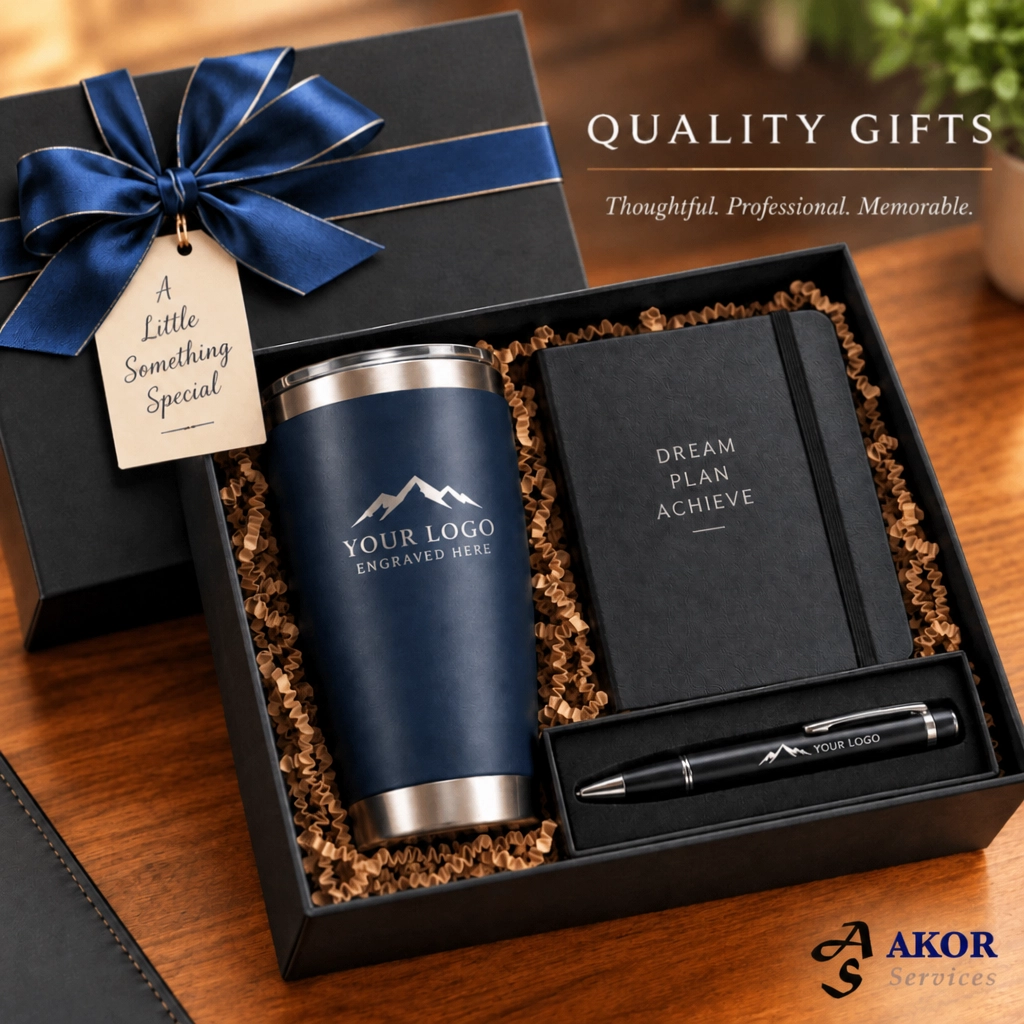
- Drinkware and promotional giveaways
- Product inserts and displays
- Laser-engraved signs, plaques, and merchandise
As a print broker, AKOR Services coordinates artwork, proofs, production, and supplier selection for the project. We can also help you think through how a physical piece supports the larger campaign: whether that means adding a QR code to a bag, planning a tap-enabled display, or creating a branded product insert that guides customers to helpful information.
Read more about the AKOR Services difference.
The idea is simple: do not treat branded items as disposable impressions. Give them a useful next step, and they can keep working long after the initial interaction.
Sources and Further Reading
- Bitly: How to Track QR Code Scans
- QR Code Generator/Bitly: How to Create QR Codes That Drive Scans
- NFC Forum: Customer Engagement
- NFC Forum: NFC in Retail and Shops
- Google Business Profile: Create a Link or QR Code to Request Reviews
Disclaimer: all bundle items are subject to applicable taxes and shipping charges, not included in listed prices, and that all special offers and incentives are subject to revision or change at any time.
AKOR Services
(360) 334-3373
Allen@akorservices.com
https://akorservices.com/the-akor-services-difference/
© 2026 All Rights Reserved, AKOR Services.